Showing posts with label drugs don't work. Show all posts

Wednesday, 19 September 2012

Big Pharma To Begin Microchipping Drugs

The age of pharmaceutical micro-chipping is now upon us. Novartis AG, one of the largest drug companies in the world, has announced a plan to begin embedding microchips in medications to create “smart pill” technology.

The microchip technology is being licensed from Proteus Biomedical of Redwood City, California. Once activated by stomach acid, the embedded microchip begins sensing its environment and broadcasting data to a receiver worn by the patient. This receiver is also a transmitter that can send the data over the internet to a doctor.
 
The idea behind all this is to create “smart pills” that can sense what’s happening in the body and deliver that information to the patient’s doctor. Novartis plans to start micro-chipping its organ transplant anti-rejection drugs and then potentially expand microchipping to other pharmaceuticals in its product lineup. This same technology could soon end up in pills made by other
 
The best laid plans…
It all sounds good on the surface, but NaturalNews readers no doubt have lots of skeptical questions about this technology. For starters, Novartis apparently isn’t planning on conducting any clinical trials that might take into account the safety issues of swallowing microchips. “Novartis does not expect to have to conduct full-scale clinical trials to prove the new products work,” reports Reuters. “Instead, it aims to do so-called bioequivalence tests to show they are the same as the original.”(http://www.reuters.com/article/idUS…)
 
But I have a question: What chemicals or heavy metals are contained in the microchip itself? A microchip that transmits data obviously must have a power source, meaning it needs to have a very small battery or capacitor of some sort.
The materials used in capacitors and batteries, to my knowledge, are toxic to the human body and should never be eaten.
 
Microchips are not food, and to swallow them seems risky to your health, especially if you’re swallowing several microchips per day.
 
Data privacy
Another huge concern with microchips that transmit data is data privacy. If these microchips are broadcasting information, then obviously that information can be picked up by anything nearby, including potentially unscrupulous individuals or organizations who might put it to a nefarious use.
For example, suppose a local pharmacy store installs a microchip signal detector in their main door entrance in order to track people who are broadcasting medication data. They could then theoretically decode that data and use it to determine what health condition that customer might be suffering and then push competing generic pharmaceuticals as a replacement.
 
Government agents could carry “pharma microchip scanners” that determine what pills you’re taking right now. This could be used to violate your privacy by sharing that data with other government agencies or it could even be sold off to third-party marketing companies.
 
I very much doubt the data being broadcast by the microchips in these pills will be encryptedbecause encryption requires real processing power, and there isn’t room for much of a CPU or power source inside these tiny microchips. Most likely, they are going to broadcast raw signal data that can be detected and decoded quite easily.
 
Remember to take your meds
 
But the really scary part about these micro-chipped medications is that this technology will be used to make sure people are taking their medication. Drug companies lose billions of dollars a year (in their minds) from patients not remembering to take their pills. Of course, half the reason they can’t remember to take their pills is because many pharmaceuticals damage cognitive function, but that’s another story.
 
So this smart-pill microchip technology will likely be used to track what pills patients have taken so that they can be “gently reminded” to take more pills they may have forgotten. In the marketing business, this is called a “continuity program.” It’s a way to make sure repeat sales happen on a regular basis.

In this context, microchipping the pills benefits the drug companies, not necessarily the patients. This is especially true when considering those pharmaceuticals that are harmful to human health — and we all know the pharmaceutical market is full of pills that have later been found to be extremely dangerous or even deadly (Vioxx, anyone?).
 
Coming soon: Police drug scanners and employer drug scanners
Now, there may be one interesting side effect to all this: Employers who are interviewing potential job candidates might be able to buy (or make) simple drug scanning devices that detect the presence of a pharmaceutical microchip broadcast signal. (You could probably make one in your garage from electronic parts purchased at Radio Shack.)
 
This might be very useful for employers who don’t want to hire people taking medications. They invite you in for an interview and quietly scan for drug broadcast data. A red light tells them you’re broadcasting medication data, and they calmly tell you the interview is over and “we’ll get back to you.”
With employers right now drowning in health insurance costs, this could provide a simple, easy way for corporations to avoid taking on anyone who might create a cost burden on their health insurance plans (from their point of view). I don’t necessarily agree with this use of the technology; I’m just saying this is one way in which it is likely to be used by employers to screen out employees who are on medications.
 
Cops, too, could use a similar scanning device to determine if a driver at the scene of an accident might be medication impaired. Now this is a use I actually do agree with. Today’s roadways are filled with mentally impaired drivers who are doped up on medications. The problem is actually far worse than drunk drivers, by the way, and yet virtually nothing is being done to combat this problem of “medicated drivers.” (Most people don’t even know the problem exists.)
 
If people taking medications are broadcasting that fact through all the little microchips they swallow, then scanning for the presence of medications is simple. It’s even easier than a breathalyzer test because it requires no action on the part of the test subject. The cop just presses a button, waits two seconds, and can then determine whether you’re broadcasting medication data. At that point, you might be arrested under suspicion of “driving while medicated.”
 
Another reason not to take meds
There are clearly a lot of unanswered questions and even some potential risks involved in taking microchipped pharmaceuticals. For some people, privacy issues may be the biggest factor of all, because who wants to broadcast the fact that they’re taking meds in the first place?
 
I don’t take any pharmaceuticals, obviously, and most NaturalNews readers avoid them, too. The fact that drugs will soon be microchipped is yet another good reason to find more holistic ways to take care of your health. Don’t bet your life (and your privacy) on Big Pharma’s pills. Choose a healthy, holistic lifestyle based on nutritious, organic foods, regular exercise and the avoidance of all man-made (synthetic) chemicals, and you most likely won’t ever need pharmaceuticals for your entire life.
The age of microchipping people and microchipping medications is now upon us. Given what the TSA is doing right now with naked body scanners, you can only imagine what Big Brother will do with any medication data you might be broadcasting from inside your body.
 
In fact, the very idea that there is a microchip inside your body that’s broadcasting data might get you flagged as a possible terrorist by the TSA, which would then proceed to finger your genitals and palm your breasts as part of their new “enhanced pat-down” groping technique.
 
The best way to avoid all this risk is to simply eat your veggies and drink your superfoods. Don’t become a trackable, traceable, microchipped subject of the medical industry that wants to turn your body into a chemical profit center.
Source: NaturalNews

Pharmaceutical Drugs are 62,000 Times More Likely to Kill You than Supplements

The UK-based, international campaign group, the Alliance for Natural Health International (ANH-Intl) recently revealed data showing that compared to supplements, an individual is:
 
Around 900 times more likely to die from food poisoning
 
Nearly 300,000 times more likely to die from a preventable medical injury during a UK hospital stay, which is comparable to the individual risk of dying that active military face in Iraq or Afghanistan
 
Additionally, the data shows that adverse reactions to pharmaceutical drugs are:
 
62,000 times more likely to kill you than food supplements
 
7,750 times more likely to kill you than herbal remedies
 
The data, which was collected from official sources in the UK and EU, demonstrate that both food supplements and herbal remedies are in the ‘super-safe’ category of individual risk – meaning risk of death from their consumption is less than 1 in 10 million. The group has created an excellent showing your relative risk of death from a variety of activities. Besides drugs and hospital injuries, you’re also more likely to die from being struck by lightning or drowning in your bathtub than having a lethal reaction to herbs or supplements…
 
According to the featured article on NewHope360.com:
“ANH-Intl executive and scientific director, Robert Verkerk PhD, hailed the figures as shedding new light on the vexed question of natural healthcare’s safety. “These figures tell us not only what activities an individual is most or least likely to die from, but also what the relative risks of various activities are to society as a whole. It puts some real perspective on the actual risk of death posed by food supplements and herbal remedies at a time when governments are clamping down because they tell us they’re dangerous.
 
… According to Dr Verkerk, the new figures should help to pressure UK and European authorities to reduce regulatory burdens on natural health products.”
 
With a Super-Safe Track Record, Why are Supplements Under Attack?
 
Vitamins, minerals and herbal supplements have a tremendously safe track record, yet they are often singled out as being potentially dangerous by government agencies like the US Food and Drug Administration (FDA). This – the notion that dietary supplements are unsafe — was the premise behind the FDA’s Draft Guidance on New Dietary Ingredients (NDI), which would have required the supplement industry to prove the safety of natural ingredients that, in many cases, have been on the market and used safely for decades!
 
Fortunately, (Free-Pr-Online.com) public outcry made the agency agree to take another look at their proposed guidance and to issue a revised draft. It’s still not known when the revisions might be completed.
 
The original NDI draft essentially claimed dietary supplements are unsafe and must be carefully tested in order to “protect consumers.” The proposed safety thresholds even exceeded those required by pharmaceutical drugs — despite extensive toxicological data showing supplements are FAR safer than drugs. As detailed above, drugs are 62,000 times more likely to kill you than supplements! Why on earth would supplements need more stringent safety thresholds than drugs?
 
It’s an obvious attempt to eliminate competition for the drug industry.
 
Data from the United States fully corroborates the featured UK data. For example, according to the latest data from the US National Poison Data System (2010 report), NO deaths were attributable to vitamin and mineral supplements that year. And, as noted byOrthomolecular Medicine News Service last year, Americans easily take more than 60 billion doses of nutritional supplements every year, and with zero related deaths this is an outstanding safety record:
 
Well over half of the U.S. population takes daily nutritional supplements. Even if each of those people took only one single tablet daily, that makes 165,000,000 individual doses per day, for a total of over 60 billion doses annually. Since many persons take far more than just one single vitamin or mineral tablet, actual consumption is considerably higher, and the safety of nutritional supplements is all the more remarkable. Over 60 billion doses of vitamin and mineral supplemnts per year in the USA, and not a single fatality. Not one. If vitamin and mineral supplements are allegedly so ‘dangerous,’ as the FDA and news media so often claim, then where are the bodies?”
The Drug Industry is the Real Health Threat
 
In striking contrast, drugs are known to cause well over 125,000 deaths per year in the US when taken correctly as prescribed – yet the FDA allows fast-track approvals and countless new additions of poorly tested drugs to the marketplace that must later be withdrawn due to their lethal consequences.
 
It is simply incomprehensible that any rational approach would seek to vilify supplements over drugs when the data in no way, shape or form supports it. The most likely motive for this position is financial greed that can put your life in jeopardy. According to the US National Poison Data System the following drug categories are among the most lethal:
  1. Analgesics, sedatives, hypnotics, and antipsychotics
  2. Cardiovascular drugs
  3. Opioids
  4. Acetaminophen combinations
  5. Antidepressants
Slightly lower down on the list you find drugs like muscle relaxants, anti-inflammatory drugs, hormones, antacids, anticoagulants, and antihistamines.
Time to Start a New “Just say NO!” Anti-Drug Movement
 
The anti-drug slogan coined by Nancy Reagan in the early 1980′s is just as applicable for today’s prescription drug problem as the recreational drug problem of the past. The only difference is that today prescription drugs have eclipsed illicit drugs as the number one source of poisoning deaths. Prescription drugs have also been identified as the primary “gateway” to illegal drug use, beating out marijuana, alcohol and cigarettes.
 
According to a July 6 press release.
 
“… Since 2000, the drugs sending people to their graves or to rehab have been shifting away from illicit drugs and toward prescription drugs. The 2011 report on the subject from the Centers for Disease Control and Prevention made it clear: prescription narcotic pain reliever overdose deaths now exceed the number of deaths from heroin and cocaine combined.


… ‘Our own clients and people calling in daily for information about our program or help have told us story after story about addictions starting with the use of prescription drugs,’ stated Derry Hallmark, Director of Admissions at Narconon Arrowhead, a premier drug rehab facility in Southeastern Oklahoma. ‘Sadly, prescription medications have become the newest of the gateway drugs. Sadder still are the losses of life and other severe consequences that go hand in hand with drug abuse, which is especially the case with prescription drug abuse.
 
Hallmark adds that those addicted to prescriptions will often end up needing treatment or will even start taking illicit drugs. One of the most common examples of this is the connection between those addicted to painkillers that then start taking heroin…”
 
It’s important to understand that there is a risk of side effects every time you take a prescription drug. No one (except for those who intentionally overdose) expects these medications to kill them, but they can do just that, and it happens far more often than you might think. In a 2011 report by the Substance Abuse and Mental Health Services Administration (SAMSHA), officials emphasized that people should not assume there’s no risk in prescribed medicines.
 
The truth is, the best way to avoid all risk, including death, from prescription drugs is to not take them at all. Remember, it’s your body, not your doctor’s and not your pharmacist’s, so it is up to you to make the decision of what drugs to take, if any. Be SURE you are aware of the risks of any medication prescribed to you, and weigh them against any possible benefit. Then you can make a well-informed decision of whether it’s a risk you’re willing to take.
Optimizing Your Health Without Drugs
 
Of course, of paramount importance is taking control of your health so you can stay well naturally, without the use of drugs or even frequent conventional medical care. If you adhere to a healthy lifestyle, you most likely will never need medications in the first place.
This includes:
 
Proper Food Choices
For a comprehensive guide on which foods to eat and which to avoid, see my nutrition plan. Generally speaking, you should be looking to focus your diet on whole, unprocessed foods (vegetables, meats, raw dairy, nuts, and so forth) that come from healthy, sustainable, local sources, such as a small organic farm not far from your home.
 
For the best nutrition and health benefits, you will want to eat a good portion of your food raw, and make sure you’re sourcing your meats and animal products from organically-raised, grass-fed or pastured animals.
 
Nearly as important as knowing which foods to eat more of is knowing which foods to avoid, and topping the list is fructose.Sugar, and fructose in particular, acts as a toxin in and of itself, and as such drive multiple disease processes in your body, not the least of which is insulin resistance, a major cause of accelerated aging.
 
Comprehensive Exercise Program, including High-Intensity Exercise like Peak Fitness
Even if you’re eating the healthiest diet in the world, you still need to exercise to reach the highest levels of health, and you need to be exercising effectively, which means including not only core-strengthening exercises, strength training, and stretching but also high-intensity activities into your rotation. High-intensity interval-type training boosts human growth hormone (HGH) production, which is essential for optimal health, strength and vigor. I’ve discussed the importance of Peak Fitness for your health on numerous occasions, so for more information, please review this previous article.
 
Stress Reduction and Positive Thinking
You cannot be optimally healthy if you avoid addressing the emotional component of your health and longevity, as your emotional state plays a role in nearly every physical disease — from heart disease and depression, to arthritis and cancer. Effective coping mechanisms are a major longevity-promoting factor in part because stress has a direct impact on inflammation, which in turn underlies many of the chronic diseases that kill people prematurely every day. Energy psychology tools such as the Emotional Freedom Technique, meditation, prayer, social support and exercise are all viable options that can help you maintain emotional and mental equilibrium.
 
Proper Sun Exposure to Optimize Vitamin D
We have long known that it is best to get your vitamin D from sun exposure, and if at all possible, I strongly urge you to make sure you’re getting out in the sun on a daily basis. There is preliminary evidence suggesting that oral vitamin D may not provide the identical benefits, although it’s still better than none at all. To determine the times of year that you can optimize your vitamin D levels through sun exposure,.
 
Take High Quality Animal-Based Omega-3 Fats
Animal-based omega-3 found in krill oil helps fight and prevent heart disease, cancer, depression, Alzheimer’s, arthritis, diabetes, hyperactivity and many other diseases.
 
Avoid as Many Chemicals, Toxins, and Pollutants as Possible
This includes tossing out your toxic household cleaners, soaps, personal hygiene products, air fresheners, bug sprays, lawn pesticides, and insecticides, just to name a few, and replacing them with non-toxic alternatives.
 

Tuesday, 18 September 2012

The end of antidepressants? Studies show they’re no more effective than placebo yet carry serious health risks

The end of antidepressants? Studies show they’re no more effective than placebo yet carry serious health risks

 
Healthcare Finance News – Stephanie Bouchard, Associate Editor

“It’s like the emperor has no clothes and people are starting to see this” — Robert Hedaya, MD

Studies finding antidepressants no more effective than placebo—Add to this cycle the serious health risks associated with antidepressant use and it is inevitable that the craze for antidepressants will end, he says. “It’s like the emperor has no clothes and people are starting to see this,” he said.
Controversial studies may have an impact
Watchers of a February broadcast of “60 Minutes” may have been stunned to learn that studies have been conducted that seem to prove that antidepressants, on the whole, are no more effective than placebo.
This revelation about antidepressants – among the top-selling and top-prescribed drugs in the United States – may have been new news to some, but the studies conducted by Irving Kirsch, PhD, and colleagues, have been raising eyebrows and garnering attention since 1998. Which begs the question, have Kirsch’s studies had any impact on the sales of antidepressants and/or on the prescribing patterns of doctors?
When asked those questions by Healthcare Finance News, the pharmaceutical industry was mum; however, IMS Health, a professional services and analytics company serving the healthcare sector, including the pharmaceutical industry, provided market data for antidepressants between 2006 and 2011.
IMS Health’s data shows that total dollars from antidepressant sales have declined since 2006 and the number of dispensed prescriptions has grown. Last fall, the Centers for Disease Control and Prevention released numbers finding that antidepressant use grew by 400 percent from 2005 to 2008. The CDC says about 11 percent of people in the United States take them.
So it seems that Kirsch’s studies on antidepressants and placebo have had little impact, if any, on the market, which comes as no surprise to some, including Kirsch.
“I think part of the problem is, many years ago psychiatrists used to do psychotherapy,” said Kirsch, associate director of the Program in Placebo Studies and the Therapeutic Encounter at Harvard Medical School. “One of the things that’s happened over the last few decades is that has decreased more and more and more so that psychiatry has become the profession of managing drugs.”
Tim Dannehy, a former pharmacist turned health coach, couldn’t agree more. “The drug companies are so influential on physicians, that I bet you half of the physicians ignored the story because they need a pill to give to people,” he said.
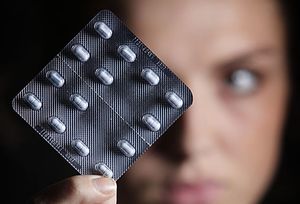
“If you take the drugs away, there’s no answer for these physicians,” he continued. “What are they going to do? The old days of sitting down with somebody and talking with them for an hour and trying to figure out what the source of their sleep problem is or the source of their depression, that’s gone. Now it’s just a 10 to 15 minute office visit and ‘I’ll write your prescription’ because that’s the only answer they have now.”
Trends in psychiatry, such as using antidepressants to treat depression, are cyclical, says Robert Hedaya, MD, founder of the National Center for Whole Psychiatry. While it may not look like Kirsch’s studies are having any impact, they are part of that historical cycle. “Every 50 years or so there’s development of new techniques, which people get really excited about and studies support and then about halfway through the cycle, questions arise and then towards the end of the cycle everyone says ‘Oh, it doesn’t quite work’ and then by around that time someone else says ‘Oh, but we’ve got this thing and the studies are great.’ And then people get excited, they make money on it and we go through the whole cycle again.”
Add to this cycle the serious health risks associated with antidepressant use and it is inevitable that the craze for antidepressants will end, he says. “It’s like the emperor has no clothes and people are starting to see this,” he said.
http://www.healthcarefinancenews.com/news/end-antidepressants

Depression? Don’t believe it —Big Pharma has gained an ever greater hold over our mental & emotional lives

Depression? Don’t believe it —Big Pharma has gained an ever greater hold over our mental & emotional lives

 
The Brisbane Times, Australia – Spetember 9, 2011
by Lisa Appignanesi

"Over the last 40 years the Diagnostic and Statistical Manual of Mental Disorders - the bible of the psychiatric professions - has spawned more and more diagnostic categories, "inventing" disorders along the way and radically reducing the range of what can be construed as normal or sane. Meanwhile Big Pharma, feeding its appetite for profits and ours for drugs, has gained an ever greater hold over our mental and emotional lives, medicalising normality."
In 2000 the World Health Organisation named depression as the fourth leading contributor to the global burden of disease and predicted that by 2020 it would rise to second place. I suppose WHO didn’t mean it to sound like a target to be aimed for, but we seem to be rising to the challenge in any case.

A new survey from the European College of Psychopharmacology, a meta-analysis of a mass of research, reports that a staggering 164.8 million Europeans – 38.2 per cent of the population – suffer from a mental disorder in any year.

As well as depression, this includes neural disorders such as dementia and Parkinson’s; childhood problems from ADHD to “conduct disorder”; and the leading anxiety disorders – everything from panic attacks to obsessive-compulsive disorder to shyness. The latest figures for Australia, from 2007, indicate that more than one in five people – 3.2 million – had suffered from anxiety, a mood disorder or substance abuse in the preceding 12 months; 2-3 per cent more were estimated to have been affected by other mental illnesses.

Depression and anxiety, they tell us, are disproportionately women’s ailments. Men, it seems, become alcoholics (another illness category) rather than depressives, particularly in eastern Europe.
Such reports are worrying. They may draw attention to a rising toll of human suffering, but they pinpoint the imperialising tendency of the mental health sector. Our ills and unhappiness are squeezed into a package labelled “disorder” and an ever-proliferating assortment of supposedly objective diagnostic categories. A cure is somehow promised, though it rarely seems to come, certainly not for everyone or for ever. In talking to the press or drafting press releases, researchers often extrapolate from their material in order to create good copy.

The notion that women are somehow more prone to mental illness often emerges. According to Hans-Ulrich Wittchen, one of the report’s authors, the reason women suffer nearly twice as much depression and anxiety disorders as men lies in the changing social pattern in which women take on work on top of marriage and children.

So stay home, ladies, and you’ll be as happy as apple pie; though in the 50s when we stayed home to bake it, the doctors gave us Miltown and Valium to help us take pain-free care of hubby and the young ones.

On the subject of women’s greater susceptibility, it’s just as well to remember that women go to doctors far more than men, for all kinds of ills: indeed, women’s greater incidence of mental ills just about equals their greater number of visits to the doctors. If men went to doctors as often as they go to the pub, it’s a fair guess that their unhappiness would be represented as depression or anxiety as well.
One of the many things that became clear to me as I was working on my book on the rise and rise of the mind-doctoring professions over the last 200 years, is that classifications of mental disorder are hardly absolutes. They are far more often constructs that mirror their time’s aspirations and ways of understanding. They may reflect subjective experience, but only insofar as we can prod and organise our inchoate inner lives to fit pre-existing psychiatric tick lists.

Useful tools for statisticians, the classifications are also useful to public health administrators, insurance companies, lobbying bodies, or pharmaceutical companies who need “homogeneous populations” on whom to carry out drug trials. But I remain to be convinced that these proliferating classifications help individuals find relief – except, of course, that momentary relief from giving an expert name to what may feel like an intractable set of problems.

Over the last 40 years the Diagnostic and Statistical Manual of Mental Disorders – the bible of the psychiatric professions – has spawned more and more diagnostic categories, “inventing” disorders along the way and radically reducing the range of what can be construed as normal or sane. Meanwhile Big Pharma, feeding its appetite for profits and ours for drugs, has gained an ever greater hold over our mental and emotional lives, medicalising normality.

The more studies that come along to tell us about the rise in mental illness, the more we fit our problems and unhappiness into a category of mental disorder, developing symptoms to take to the doctor in search of a cure. Humans are suggestible creatures. And doctors like to help: they provide the pills Big Pharma recommends, though many must now know that research has shown placebos can work just as well and with fewer side effects.

If doctors – rather than politicians or teachers or priests or friends and family – are to be the guardians of our wellbeing, then doctors really should be provided with new kinds of “treatments”. Psycho- and group therapy could, of course, be rolled out, and not just of the 10-week variety: anything that builds up the individual’s inner resources and allows emotions to be reflected on can’t be bad.

But doctors could recommend group running for depression, proved to have far better effects than SSRIs. Reading groups, too, offer a definite lift. As for women, more free childcare, after-school clubs and husbands who take days off to go to the doctor with the kids (or sort out that drinking problem) would lift a depressed mood wonderfully. Then there’s poverty, terrible schools … could health systems take those on as well?

25 Good Reasons Why Psychiatry Must Be Abolished

25 Good Reasons Why Psychiatry Must Be Abolished
by Don Weitz, Psychiatric Survivor & 24-year activist in the psychiatric liberation movement

1. Because psychiatrists frequently cause harm, permanent disabilities, death – death of the body-mind-spirit.
2. Because psychiatrists frequently violate the Hippocratic Oath which orders all physicians “First Do No Harm.”
3. Because psychiatrists patronize and dis-empower people, especially their patients.
4. Because psychiatry is not a medical science.
5. Because psychiatry is quackery, a pseudo-science which lacks independent diagnostic tests, testable hypotheses, and cures for “schizophrenia” and all other types of alleged “mental illness” or “mental disorder”.
6. Because psychiatrists can not accurately and reliably predict dangerousness, violence, or any other type of human behaviour, yet make such claims as “expert witnesses”, and with the media promote the “dangerous mental patient” myth/stereotype.
7. Because psychiatrists have caused a worldwide epidemic of brain damage by promoting and prescribing brain-disabling treatments such as the neuroleptics, antidepressants, electroconvulsive brainwashing (electroshock), and psychosurgery (lobotomy).
8. Because psychiatrists manufacture hundreds of “mental disorders” classified in its bible called “Diagnostic and Statistical Manual of Mental Disorders” (a modern witch-hunting manual); such “mental disorders” and “symptoms” are in fact negative, class-and-culturally-biased moral judgments for dissident ways of coping with personal problems and alternative ways of perceiving, interpreting or being in the world.
9. Because psychiatrists, blinded by their medical model bias, fraudulently pathologize and label people’s serious life or existential crises as “symptoms” of “mental illness” or “mental disorder” such as “schizophrenia”, “bipolar affective disorder”, and “personality disorder”.
10. Because psychiatrists compound this fraud by falsely claiming, without scientific proof, that these “mental disorders” are caused by a “biochemical imbalance” in the brain, genetic factors or “genetic predispositions”, despite the fact that there are no genetic factors in “mental illness”.
11. Because psychiatrists frequently misinform their patients, families and the public by claiming that brain-disabling procedures such as the neurotoxins (e.g., “antipsychotic medication” and “antidepressants”), electroconvulsive brainwashing (electroconvulsive therapy/”ECT”), psychosurgery (lobotomy) and other behaviour modification-mind control procedures are “safe, effective and lifesaving”. The exact opposite is tragically true.
12. Because psychiatrists routinely deceive or lie to patients, prisoners, their families, and the public.
13. Because psychiatrists routinely and willfully violate the medical-ethical principle of “informed consent” by misinforming or not informing their patients about the numerous toxic, disabling and frequently permanent effects of the neuroleptics such as memory loss, tardive dyskinesia, tardive psychosis, parkinsonism, dementia (all signs of brain damage), and death.
14. Because psychiatrists routinely threaten, intimidate or coerce many patients – particularly women, children, the elderly, and prisoners – into consenting to health-threatening/brain-damaging “treatment” such as the antidepressants, neuroleptics, electroconvulsive brainwashing, and hi-risk experiments.
15. Because psychiatrists frequently fail to fully inform psychiatric inmates and prisoners about existing safe and humane, non-medical alternatives in the community such as survivor-controlled crisis centres, drop-ins, self-help or advocacy groups, diet, massage, wholistic medicine, affordable supportive housing, and jobs.
16. Because psychiatrists are sexist in frequently stereotyping women in crisis as “hysterical” or “over-emotional”, blaming women whenever they voice real complaints and assertively express their feelings and emotions, prescribing massive doses of tranquilizers and antidepressants to disproportionately large numbers of women, and in sexually assaulting women in their offices and institutions.
17. Because psychiatrists, particularly white male psychiatrists, are homophobic – the American Psychiatric Association (APA) once labelled homosexuality as a “mental illness” or “mental disorder” – and have used forced electroshock on lesbians, trying to coerce them into adopting a heterosexual life style.
18. Because psychiatrists are ageist in prescribing tranquilizers, antidepressants (“medication”) and electroconvulsive brainwashing for disproportionately large numbers of elderly people – a form of elder abuse.
19. Because psychiatrists are racist in disproportionately incarcerating and drugging people of African descent, aboriginal people, other people of colour and labelling them “psychotic” or “schizophrenic”.
20. Because psychiatrists routinely violate people’s civil rights, human rights and constitutional rights such as imprisoning innocent people without court trial or public hearing (“involuntary commitment”), and subjecting them to cruel and unusual punishments or tortures such as forced drugging, electroconvulsive brainwashing, psychosurgery, solitary confinement, “chemical restraints”, and 4-point or 5-point restraints.
21. Because psychiatrists masterminded the mass murder of hundreds of thousands of vulnerable people including disabled children, the elderly and psychiatric patients during The Holocaust in Nazi Germany, and “selected” hundreds of thousands of concentration camp prisoners for death (“T-4 euthanasia” program) – historical facts still missing in psychiatric textbooks and histories.
22. Because psychiatrists have willingly participated in and administered mind-control experiments in the United States and Canada since the early 1950s – its chief targets have been poor patients, women, dissidents and prisoners.
23. Because psychiatry, particularly institutional-biological psychiatry, is based on the 3 Fs: Fear, Fraud, and Force.
24. Because psychiatry is a form of social control or punishment – not treatment.
25. Because psychiatry, particularly institutional-biological psychiatry, is fascist – a direct threat to democracy, human rights and life.
A note from the author: This statement is a slightly revised version of the original written in spring 1998. Feel free to add and publish your own reasons. I am a psychiatric survivor and antipsychiatry activist who has been involved in the psychiatric survivor liberation movement for 24 years. I am also co-editor of “Shrink Resistant: The Struggle Against Psychiatry in Canada” (1988), host-producer of the antipsychiatry program “Shrinkrap” on CKLN radio (88.1 FM) in Toronto, member of People Against Coercive Treatment (P.A.C.T.), and member of the Ontario Coalition Against Poverty (OCAP).
PLEASE SNOWBALL, COPY AND PUBLISH THIS STATEMENT INCLUDING THE NOTE. NO COPYRIGHT OR PERMISSION REQUIRED.

The Pharna/Psych Industries - An Evil Empire?

The psychiatric and phramacuetical industries are a twin headed hydra, a symbiotic parasite that feed off of each other and of us, of our fear, anger. grief, lonliness, despair and depression.

I no longer see these two as two separate industries, their interests are so closely intertwined, they model the industrial-military complex, where one creates the situation in which the other provides the solution and they both get rich on other people's misery.

I believe we should coin a new phrase that signifies this relationship between the two, so it no longer lies hidden, let's just call it the Psych/Pharma Complex. So whenever you meet a pyschiatrist, recall this phrase and acknowledge to yourself their close ties to the other side of the coin.

Together, these two generate profits in the billions and are busy classifying normal human emotions as mental illnesses so they can increase those profits, milking us, their cash cows, even more.

Think I'm overstaing the case? Then would you believe Dr Jerome Kagan?

And who is he? Well, Dr Kagan is one of the most celebrated psychologists ever, he was voted higher in the top 100 psychologists of the 20th Century than the legendary Carl Jung, coming in at no 22. He spent most of his career at Harvard and is currently an emeritus professor at Harvard and a faculty member at the New England Complex Systems Institute.

In a recent Der Speigel interview he had very little good to say about his profession. He has even attacked his own profession in his recently published book "Psychology's Ghost: The Crisis in the Profession and the Way Back." In it, he warns that this crisis has had disastrous consequences for millions of people who have been incorrectly diagnosed as suffering from mental illness.

SPIEGEL: … you could also say skyrocketed. In the 1960s, mental disorders were virtually unknown among children. Today, official sources claim that one child in eight in the United States is mentally ill.
Kagan: That's true, but it is primarily due to fuzzy diagnostic practices. Let's go back 50 years. We have a 7-year-old child who is bored in school and disrupts classes. Back then, he was called lazy. Today, he is said to suffer from ADHD (Attention Deficit Hyperactivity Disorder). That's why the numbers have soared.
SPIEGEL: Experts speak of 5.4 million American children who display the symptoms typical of ADHD. Are you saying that this mental disorder is just an invention?
Kagan: That's correct; it is an invention. Every child who's not doing well in school is sent to see a pediatrician, and the pediatrician says: "It's ADHD; here's Ritalin." In fact, 90 percent of these 5.4 million kids don't have an abnormal dopamine metabolism. The problem is, if a drug is available to doctors, they'll make the corresponding diagnosis.

How damning is that, and he says more....


SPIEGEL: What does it mean if millions of American children are wrongly being declared mentally ill?
Kagan: Well, most of all, it means more money for the pharmaceutical industry and more money for psychiatrists and people doing research.
SPIEGEL: And what does it mean for the children concerned?
Kagan: For them, it is a sign that something is wrong with them -- and that can be debilitating. I'm not the only psychologist to say this. But we're up against an enormously powerful alliance: pharmaceutical companies that are making billions, and a profession that is self-interested.


SPIEGEL: Should one just wait to see whether depression will go away by itself?
Kagan: That depends on the circumstances. Take my own case: About 35 years ago, I was working on a book summarizing a major research project. I wanted to say something truly important, but I wasn't being very successful. So I went into a textbook-type depression. I was unable to sleep, and I met all the other clinical criteria, too. But I knew what the cause was, so I didn't see a psychiatrist. And what do you know? Six months later, the depression had gone.
SPIEGEL: In a case like that, does it even make sense to speak of mental illness?
Kagan: Psychiatrists would say I was mentally ill. But what had happened? I had set myself a standard that was too high and failed to meet that standard. So I did what most people would do in this situation: I went into a depression for a while. Most depressions like that blow over. But there are also people with a genetic vulnerability to depression in whom the symptoms do not pass by themselves. These people are chronically depressed; they are mentally ill. So it is important to look not just at the symptoms, but also at the causes. Psychiatry is the only medical profession in which the illnesses are only based on symptoms …


SPIEGEL: … and it seems to discover more and more new disorders in the process. Bipolar disorders, for example, virtually never used to occur among children. Today, almost a million Americans under the age of 19 are said to suffer from it.
Kagan: We seem to have passed the cusp of that wave. A group of doctors at Massachusetts General Hospital just started calling kids who had temper tantrums bipolar. They shouldn't have done that. But the drug companies loved it because drugs against bipolar disorders are expensive. That's how the trend was started. It's a little like in the 15th century, when people started thinking someone could be possessed by the devil or hexed by a witch.

Kagan: I share your unhappiness. But that is the history of humanity: Those in authority believe they're doing the right thing, and they harm those who have no power.

Kagan: Psychiatrists should begin to make diagnoses the way other doctors do: They should ask what the causes are.
SPIEGEL: The problems you describe are not new. Why do you believe psychiatry is in a crisis at this specific time?
Kagan: It's a matter of the degree. Epidemiological studies are saying that one person in four is mentally ill. The Centers for Disease Control and Prevention in Atlanta recently announced that one in 88 American children has autism. That's absurd. It means that psychiatrists are calling any child who is socially awkward autistic. If you claim that anyone who can't walk a mile in 10 minutes has a serious locomotor disability, then you will trigger an epidemic of serious locomotor disabilities among older people. It may sound funny, but that's exactly what's going on in psychiatry today.
SPIEGEL: Do you sometimes feel ashamed of belonging to a profession that you think wrongly declares large parts of society to be mentally ill?
Kagan: I feel sad, not ashamed … but maybe a little ashamed, too.


Dr Peter Breggin - a lifetime fighting the scourge of Big Pharma

Dr Breggin's radio show will give you fantastic information, whistleblowing on the parmacuetical industry and its abuses on people worldwide.

In this particular show, Dr Breggin showcases author , who knows her stuff about and . Enlightening discussions about Direct to Consumer Advertising, the Feds $3 billion fines against Glaxo, and how the military was bought by Pharma. New information!

Read more: http://prn.fm/2012/07/09/dr-peter-breggin-hour-070912/#ixzz26pnv5Qap
Under Creative Commons License: Attribution

The Drugs Don't Work, Discover What Does! An Introduction

I see so much wrong with the so-called 'Medical Model', the model that so much of our healthcare system is based on, that I sometimes don't know where to start in listing it's faults.

Whilst I find it lacking in treating physical illness, it is in the arena of mental health that I find it's shortcomings so reprehensible. 

The cult of psychiatry, the pharmacuetical industry, whose motives are cloudy at best, and a person's disassociation with themselves all colloborate to create the tidal wave of mental distress that seems to have become pandemic in the modern world.

To start with, I take issue with the word 'mental', as I believe it is not merely a sickness of the mind but more emotional and spiritual pain that troubles most of us and gets labelled as depression, anxiety, personality disorder etc.

When we turn to our doctors demonstrating our pain and distress and asking for help, it's often because we feel unable to turn to family and friends; we feel ashamed, weak, anxious and distressed and occasionally we simply refuse to be vunerable in front of those who think they know us best.

And what do we get from our doctors? Not time, not a shoulder to cry on or support, and I fully appreciate that doctors are so overwhelmed with their patient load to give us what we truly need, instead they give us a prescription for pills.

Does anyone truly believe that an unnatural chemical compound, that usually comes with a list of side effects that are worse than the symptoms that drove you to the doctor's surgery, will actually make you feel better?

The drugs may sedate you, may suppress the feelings of distress and depression but they will never make you feel better. That's because they only target the symptoms, burying them, but they do not address the cause of your distress. They never ever will, they can't, only you can.

There are a number of website and books by people much more learned than I that lay out in great detail the horror of psychiatry amd the monstrous lie that is  the pharmacuetical 'cure'. Lies that are continually perpetuated by the pyschiatric industry in the endless drive for influence and profit. I'll give you a list of my favouraite in another post soon.

I'm not learned enough to do more than endorse the facts that others have uncovered. However, I instinctively, spiritually, logically and with every cell of my being simply know that the psychiatric and pharmacuetical industry are based on lies, and here in the 21st century they continue to poison and torture those who have entrusted themselves into the care of the mainstream mental health industry.

I will share the research of others and point you to websites and books that substantiate the claims I make.

However, more than negatively detailing the horrors of the psych/pharma industry, I am going to detail real, useful, proven alternatives, natural energy healing techniques, and simple diet, exercise and self-prevention tips to stay mentally, emotionally and spiritually well.

I want to help you clear any mental distress you may be feeling, to heal the trauma that created the emotional upset, and to then help you stay in a state of complete spiritual, emotional and mental wellbeing.

You don't need to put yourself in a drug induced stupor and stay stuck, never escaping your problems, you don't need to harm yourself by trusting your care to the mental health industry.

Some how our society has become so disempowered, so separate from our true selves that we believe taking a pill of strange, unnatural chemical compounds, that even the makers admit to being highly dangerous to our health,will restore ourselves to our natural state of wellbeing, balance and equilibrium.

Now it's time for us to return to our true nature, to heal ourselves with the power of being who we truly are. regaining health and vitality in all areas of our lives, the emotional, spiritual, mental and physical. It's all connected and we need to respect and care for every aspect of ourselves to be truly well.

For now, Be Well.

Just what the world needs, another pill.

Read the story below, and what you'll learn is that this isn't a pill that 'cures' depression, because none of them ever do. No this pill is designed to be taken in conjunction with your anti-deoressant to mitigate the feelings of anxiety that many people feel alongside their depressive feelings.


Crikey, cos we want to double the pharma profits by taking more and more pills never mind the effect all those synthetic unnatural compunds have on our body and mind. Learn how to control stress and curb your anxiety through systems and processes that actually work and don't do you any damage. Try CBT, EFT or Tapping which I can personally attest works marvelously or try Dr Alex Lloyds' The Healing codes, but stop believing the damn pills will help!

Addex partner Janssen Pharma starts dosing patient in phase II study of ADX71149 to treat major depressive disorder

Geneva, Switzerland
Tuesday, September 18, 2012, 10:00 Hrs [IST]
Addex Therapeutics, a leading company pioneering allosteric modulation-based drug discovery and development, announced that its partner Janssen Pharmaceuticals, Inc., has dosed the first patient in a multi-centre, double-blind, phase II study of ADX71149 in adults with major depressive disorder who are also suffering anxiety symptoms.

ADX71149 is a positive allosteric modulator (PAM) of metabotropic glutamate receptor 2 (mGluR2), a Family C class of G protein coupled receptors (GPCR) that is being developed jointly by Addex and Janssen Pharmaceuticals, Inc. ADX71149 is also being studied in a phase II clinical trial for the treatment of positive and negative symptoms of schizophrenia, with top-line data expected in the fourth quarter of this year.

"Dosing of the first patient in this phase II study with ADX71149, in its second indication, continues our successful collaboration with, Janssen," noted Bharatt Chowrira, CEO of Addex Therapeutics. "Both partners are encouraged by the development of ADX71149 to date particularly because there is a significant medical and market opportunity for an innovative approach for treating the anxiety experienced by more than 50 per cent of patients with depression.”

The multi-centre, double-blind, placebo-controlled study to evaluate the efficacy and overall safety and tolerability of ADX71149 (Clinicaltrials.gov ref NCT01582815) will be conducted as an adjunctive treatment to an antidepressant in 94 adults with major depressive disorder with anxiety symptoms. Oral ADX71149 will be administered twice-daily at doses ranging from 25mg to 150mg. Patients will continue to take the same daily dose of their antidepressant. The primary endpoint of the study is the change from baseline in the Hamilton Anxiety Rating scale (HAM-A6) score. Secondary endpoints include change from baseline of several other clinician-administered rating scales designed to assess the severity of depression and anxiety symptoms.

The development of ADX71149 is part of a worldwide research collaboration and licence agreement between Addex and Janssen Pharmaceuticals, Inc. to discover, develop and commercialize a novel mGluR2 PAM medication for the treatment of anxiety, schizophrenia and other undisclosed indications. Under the terms of the agreement, Addex is eligible for up to a total of €112 million in milestone payments based on potential development and regulatory achievements. In addition, Addex is eligible for low double-digit royalties on sales of any mGluR2 PAM medication developed under the agreement.

Addex Therapeutics discovers and develops an emerging class of small molecule drugs, called allosteric modulators, which have the potential to be more specific and confer significant therapeutic advantages over conventional "orthosteric" small molecule or biological drugs.